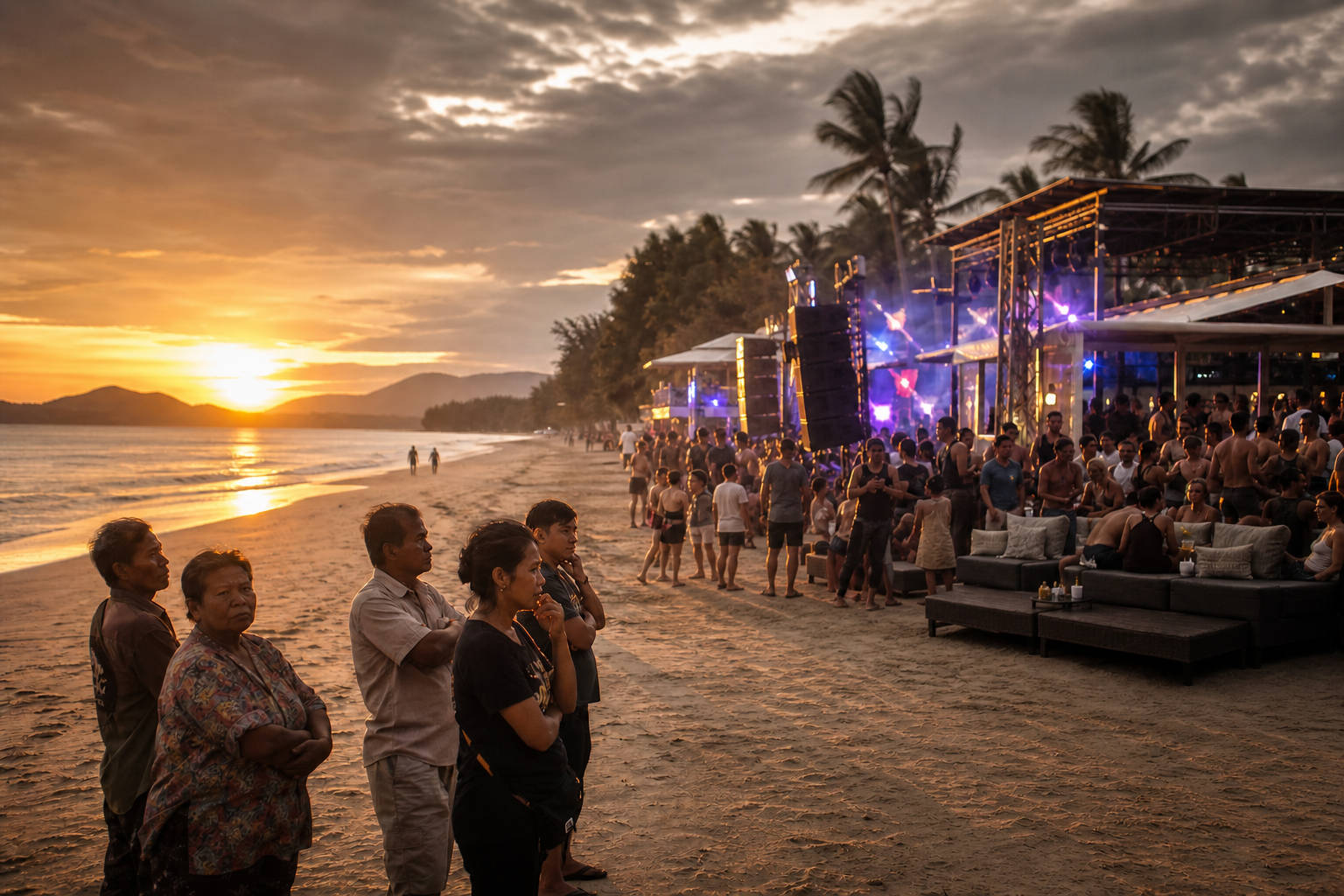
PHUKET — For years, the serene stretch of Bang Tao Beach in Cherng Talay has captured the perfect balance of tropical beauty and residential tranquility. Known globally as a premier family-oriented destination, the area has attracted multi-generational residents, long-term expatriates, and high-value tourists seeking a peaceful retreat. Recently, however, this delicate ecosystem became a battleground between public law and commercial lawlessness.
Following a high-profile crackdown by the Internal Security Operations Command (ISOC) Region 4, which shuttered 16 prominent beachfront venues for public land encroachment, the local community is drawing a line in the sand. In a powerful open petition from the newly appointed Governor of Phuket, Chotinarin Kerdsom, and Rear Admiral Praphan Srisuvipa, residents are demanding that this temporary pause in operations becomes a standard for the rule of law.
View the Online Petition Here: https://c.org/cxZ5Jhmbs2
A Community Pushed to the Brink
Until the recent military and provincial intervention, the residential community of Moo 2, Cherng Talay, was locked in a daily, exhausting crisis. High-profile venues – including Maya Beach Club, Yuuhi Beach Club, and over a dozen other establishments – had systematically converted a protected public beachfront into an unregulated, high-decibel nightlife strip.
Every single night, amplified bass and open-air parties regularly blasted until 03:00 AM or 04:00 AM. For the thousands of residents living within the acoustic radius of these venues, life became unlivable. Sleep deprivation became the norm for local families, while surrounding boutique hotels, luxury villas, and holiday rentals faced a wave of early check-outs, booking cancellations, and devastatingly negative online reviews. A destination built on the promise of peace was rapidly being rebranded by a handful of operators into an aggressive party zone.
The Double Violation: Zoning and Encroachment
The community’s grievance rests on two undeniable pillars of institutional violation: zoning laws and environmental protection.
First, Bang Tao is fundamentally designated as a residential and family-tourism area, not an entertainment zone like Patong’s Bangla Road. Operating large-scale, open-air nightclubs in the immediate vicinity of homes and resorts directly breaches Thai public health regulations and environmental noise pollution statutes.
Second, the crisis was facilitated by blatant territorial overreach. The ongoing ISOC Region 4 investigation revealed that these 34 illegal structures – spanning commercial beach clubs and residential add-ons – were built directly on protected state forest land in violation of the Forest Act. These venues were not merely disturbing the peace; they were doing so while illegally occupying land that belongs to the public, exploiting shared natural resources for private, commercial gain without valid construction or zoning permits.
Breaking the Cycle of the “Grand Reopening”
Right now, the streets of Bang Tao are quiet, and the beach has temporarily returned to the public. However, history in Phuket has made local stakeholders deeply skeptical. For over a decade, the island has witnessed a predictable cycle: a brief administrative crackdown occurs, electricity is cut, venues close for a few weeks, and then – following intense backroom lobbying – a “grand reopening” is announced. Within days, the status quo returns, laws are ignored, and operators resume doing whatever they want.
Local residents are loudly warning the new administration that this cycle must end. Reports indicate that the operators of the 16 named venues are currently exerting immense pressure on provincial authorities to grant them permission to reopen their doors.
A Blueprint for the New Administration
As Governor Chotinarin Kerdsom takes the reins of Phuket’s provincial government, the Bang Tao crisis represents a defining test of his administration’s commitment to public order and the rule of law. The community has laid out a clear framework for what sustainable governance looks like moving forward:
- Maintain the Shutdown: Authorities must reject all commercial petitions to reopen these structures until the ISOC land-encroachment legal proceedings are fully and transparently resolved.
- Enforce Strict Future Operating Conditions: If any venue in this residential perimeter is ever cleared to operate in the future, it must be bound by strict, legally non-negotiable mandates that shut off all amplified outdoor music by standard local zoning hours.
- Continuous Institutional Oversight: Environmental officers must deploy routine, unannounced decibel testing at residential property lines to ensure that compliance is monitored continuously, not just during high-profile inspections.
Conclusion: Profit vs. The Rule of Law
Ultimately, the battle over Bang Tao Beach is a microcosm of a larger debate regarding the future of Phuket’s tourism economy. This issue is not about restricting legitimate business or stifling economic growth; it is about deciding what kind of island Phuket wants to be.
While these rogue beach clubs are driven solely by short-term commercial profit, the community is asking for something far more valuable: sustainability, health, and respect for the law. For Phuket to remain a world-class destination, every business and citizen must operate under the same legal boundaries. The current quiet over Bang Tao must not be a temporary anomaly—it must be the blueprint for a lawful, livable Phuket.
View the Petition Here: https://c.org/cxZ5Jhmbs2