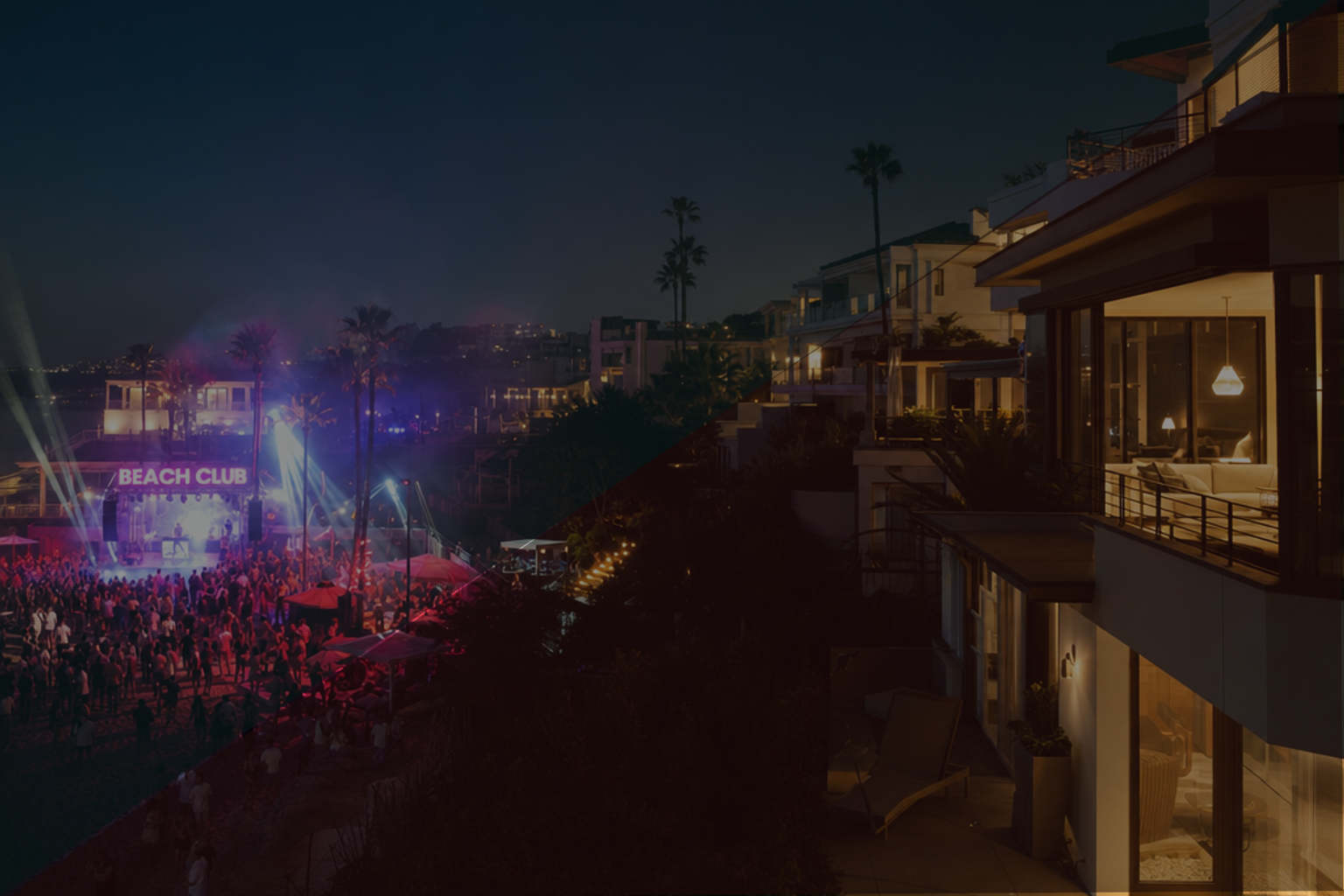
For years, Bang Tao Beach in Phuket has marketed itself as a sophisticated alternative to the island’s louder nightlife districts. It is home to luxury resorts, condominiums, villas, families and long-term residents who come for the beach and a more relaxed lifestyle.
But along parts of the Bang Tao beachfront, another identity emerged: late-night beach clubs, DJs, loud music and parties continuing well after sunset.
Today, many of the venues at the centre of that scene are closed.
The closures came amid a major government investigation into structures and businesses operating on disputed public beachfront land. But the land-use investigation also raises another question for Bang Tao residents and visitors: how did venues operating close to residential areas become able to host increasingly late and loud parties in the first place?
From beach restaurants to late-night party venues
Bang Tao’s beachfront changed significantly over recent years. What had traditionally been a mix of restaurants and small beach bars developed into a much more active nightlife scene, with larger beach clubs and DJ-led events.
A July 2026 report by Phuket101 described the southern end of Bang Tao Beach as having developed rapidly, with increasingly large beach clubs hosting DJ parties late into the night. The same report documented closure notices at several venues, including Maya Beach Club, Nomad Beach Club and Yuuhi Beach Club & Karaoke.
Maya Beach Club, for example, was publicly promoted as offering live entertainment and music into the evening and had listed operating hours extending to midnight before its closure.
For people staying in nearby residential properties, hotels and condominiums, the issue was therefore not simply whether a restaurant served dinner. The question was whether a beachfront area increasingly surrounded by residential accommodation was becoming an unofficial nightlife district.
Bang Tao is not Patong
This distinction matters.
Patong is internationally known for nightlife. Bang Tao has a different character. The area is heavily residential and resort-oriented, with villas, condominiums, hotels, schools and families living alongside the tourism businesses.
Property and area guides describe Bang Tao and Laguna as a family-oriented residential and resort area rather than Phuket’s equivalent of Patong’s nightlife district.
That does not mean that music, restaurants or beach clubs cannot operate in Bang Tao.
It does mean that the question of where, under what licence and until what time amplified entertainment can operate becomes important when venues are immediately adjacent to homes and accommodation.
It would be too simplistic to say that every part of Bang Tao is legally classified as a single “residential zone.” Zoning and permitted use can vary by specific plot and planning designation. However, the wider Bang Tao/Cherng Talay area unquestionably contains substantial residential development, making land-use and noise controls particularly relevant.
Four venues became part of a much bigger investigation
The issue became substantially more serious in 2026.
In June, we reported that a provincial fact-finding committee had inspected Bang Tao Beach following allegations of encroachment onto public land. Preliminary findings indicated that structures and businesses occupied approximately six rai of land identified as public property.
Authorities subsequently identified 16 beachfront businesses under investigation.
The list included:
- Maya Beach Club
- Yuuhi Beach Club
- Solis Beach Club
- Nomad Beach Club Phuket
- The Wave Phuket
- Ember Steak House
- Bud Haven
- Reggae Bar
- Tiki Shack Bar & Restaurant
- MAMBA
- Beach Pig
- A-Loma Massage
- ALOMA
- ALOMA Bang Tao
- Blue Ocean Restaurant & Bar
- Golden Fish
The authorities stressed that the investigation was intended to establish the facts, including land boundaries, ownership claims and the extent of development—not to determine guilt or innocence in advance.
That distinction is important.
The businesses being investigated should not automatically be described as having committed criminal offences merely because their names appeared on the inspection list.
But it is equally important that the public-land issue is not dismissed as a simple disagreement over paperwork.
The beachfront land question
According to the provincial investigation reported in June, officials identified 34 structures in the disputed area, including commercial premises and residential properties. Authorities were examining whether structures stood on public land or forest land protected under Thailand’s Forest Act.
By July, reports from the area indicated that closure notices had been posted at a number of the businesses.
Phuket101 reported finding Maya Beach Club, Nomad Beach Club, Yuuhi Beach Club and other venues closed during a July 9 visit.
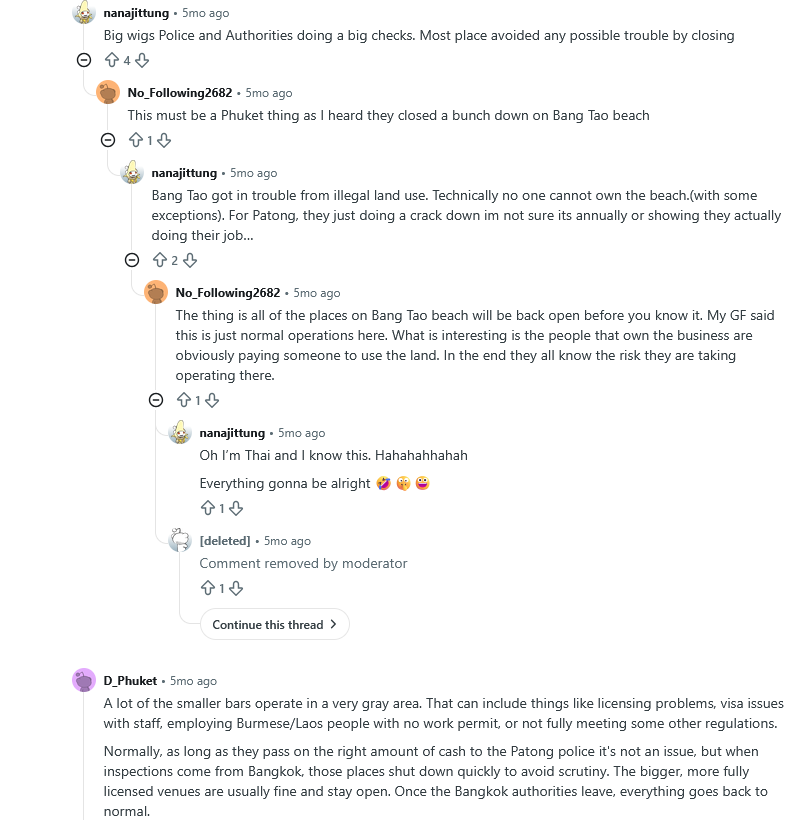
The closures were also being discussed by visitors online. In a Reddit discussion from May 2026, users described the Bang Tao closures as being connected to the public-land issue, with one commenter saying authorities had arrived and that the venues subsequently remained closed. These are individual user reports, not independently verified evidence, but they illustrate how the situation was being perceived by people visiting the area.
But what about the parties?
This is where the story becomes more complicated.
The land investigation is documented. The closures are documented. The list of businesses under investigation is documented.
The history of late-night parties is also reported by local sources.
A 2026 article about Bang Tao described Maya and Yuuhi as operating more like nightlife venues, with DJs reportedly continuing until approximately 2am or later. However, that publication also contains allegations about official misconduct and corruption that have not been established by the government investigation, so those allegations should not be treated as proven facts.
The broader pattern is nevertheless clear: Bang Tao’s beachfront had developed a nightlife component that went considerably beyond the traditional image of a quiet beach restaurant.
And that raises a legitimate public question:
Were the relevant entertainment, noise, alcohol, operating-hour and land-use permissions actually appropriate for the locations in which these businesses were operating?
That is a question for the authorities and the documentary record—not something that can be answered simply by looking at a venue’s advertising.
Residents versus the party economy
For residents, the issue is fundamentally different from the perspective of a tourist visiting for one evening.
A tourist may see a DJ, a packed dance floor and loud music as part of a holiday.
Someone living nearby hears the same music repeatedly.
Every night.
The tension between tourism and residential life is not unique to Phuket. But Bang Tao’s rapid development makes the balance particularly important. The area has attracted families, long-term residents and major residential projects precisely because it offers something different from Patong.
If the beachfront becomes an entertainment strip where amplified music continues deep into the night, that changes the character of the neighbourhood.
And if businesses are permitted to operate late-night entertainment, residents are entitled to ask whether those businesses have the correct permissions and whether noise regulations are being enforced consistently.
What people were saying
Residents discussions provide another window into how visitors and residents perceived the situation, although they should not be confused with official evidence.
In one discussion following the crackdown, people described Bang Tao’s closures as connected to illegal or disputed land use. Another commenter suggested that the businesses would eventually reopen and characterized the situation as something that had happened before. Those claims are anecdotal and were not verified in the discussion itself.
Another Reddit thread from the same period referred to authorities conducting major checks in Phuket and users discussing the Bang Tao closures.
People are confirming that businesses were paying officials, that police were deliberately ignoring violations, or that authorities were protecting particular operators require evidence.
The question that remains
The most interesting question for Bang Tao may therefore not be whether the beach clubs are currently closed.
They are.
The more important question is what happens next.
Will the authorities permanently remove businesses that are found to be occupying public land?
Will some venues be permitted to return under new arrangements?
Will operators be allowed to continue late-night entertainment?
Will amplified music be subject to stricter limits because of nearby residential properties?
And will the rules be applied consistently to every operator?
As of July 2026, Phuket101 reported that it remained unclear which of the closed businesses would eventually reopen.
The June investigation was also explicitly described by officials as a fact-finding process, with the committee examining land boundaries, ownership claims and the extent of development before submitting its findings to the Phuket Governor.
Bang Tao beach clubs were illegal.
The documented story is more nuanced:
A rapidly expanding beachfront entertainment scene developed in an increasingly residential and resort-oriented part of Phuket. Several venues became the subject of an official investigation into disputed public-land use. Authorities subsequently ordered or posted closures at numerous businesses. At the same time, reports and public discussions had raised concerns about increasingly late-night entertainment and noise.
One thing is already clear.
Bang Tao’s beachfront is being forced to answer a question that should perhaps have been asked much earlier: is it a residential beach with some nightlife, or is it becoming a nightlife district with residents living around it?